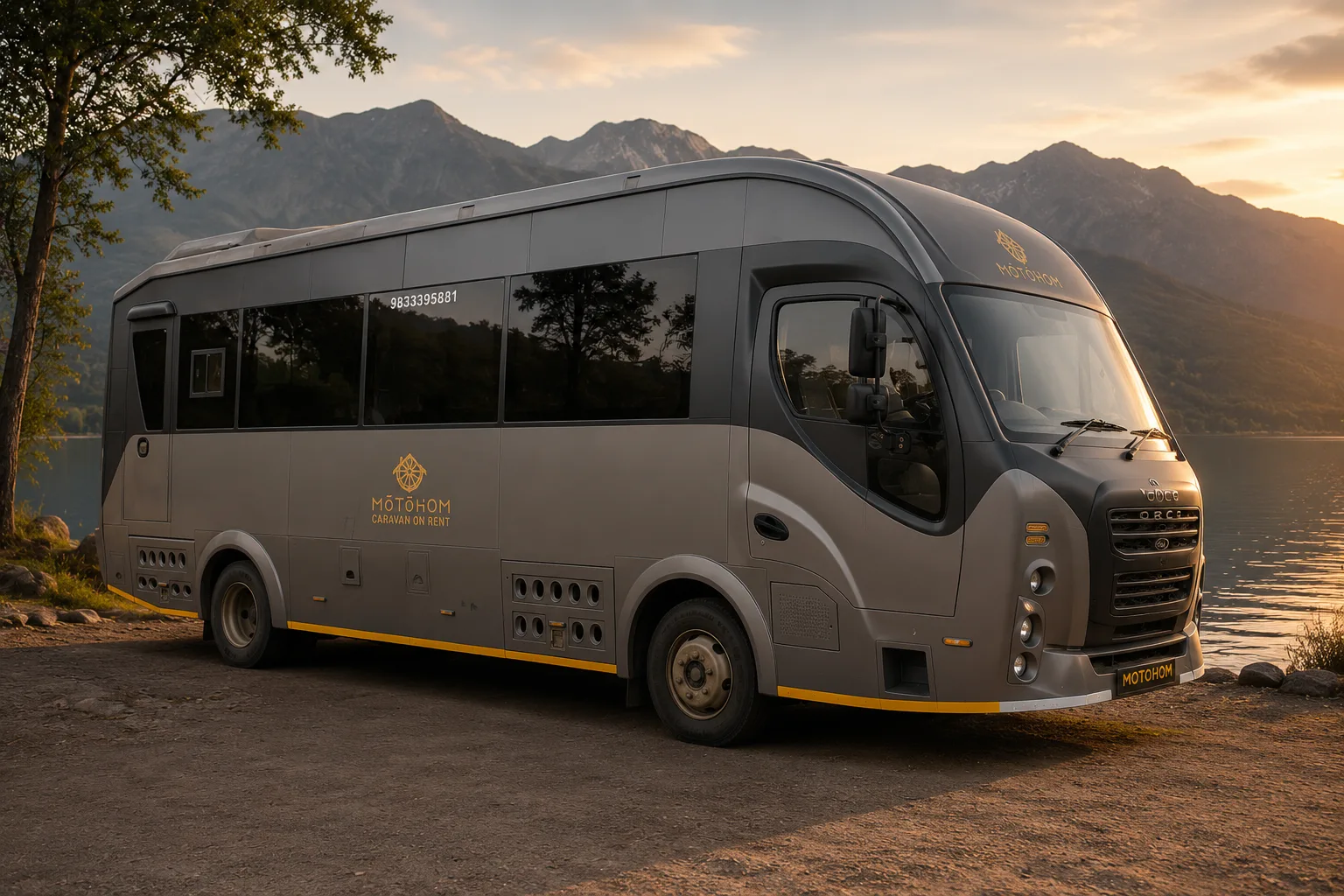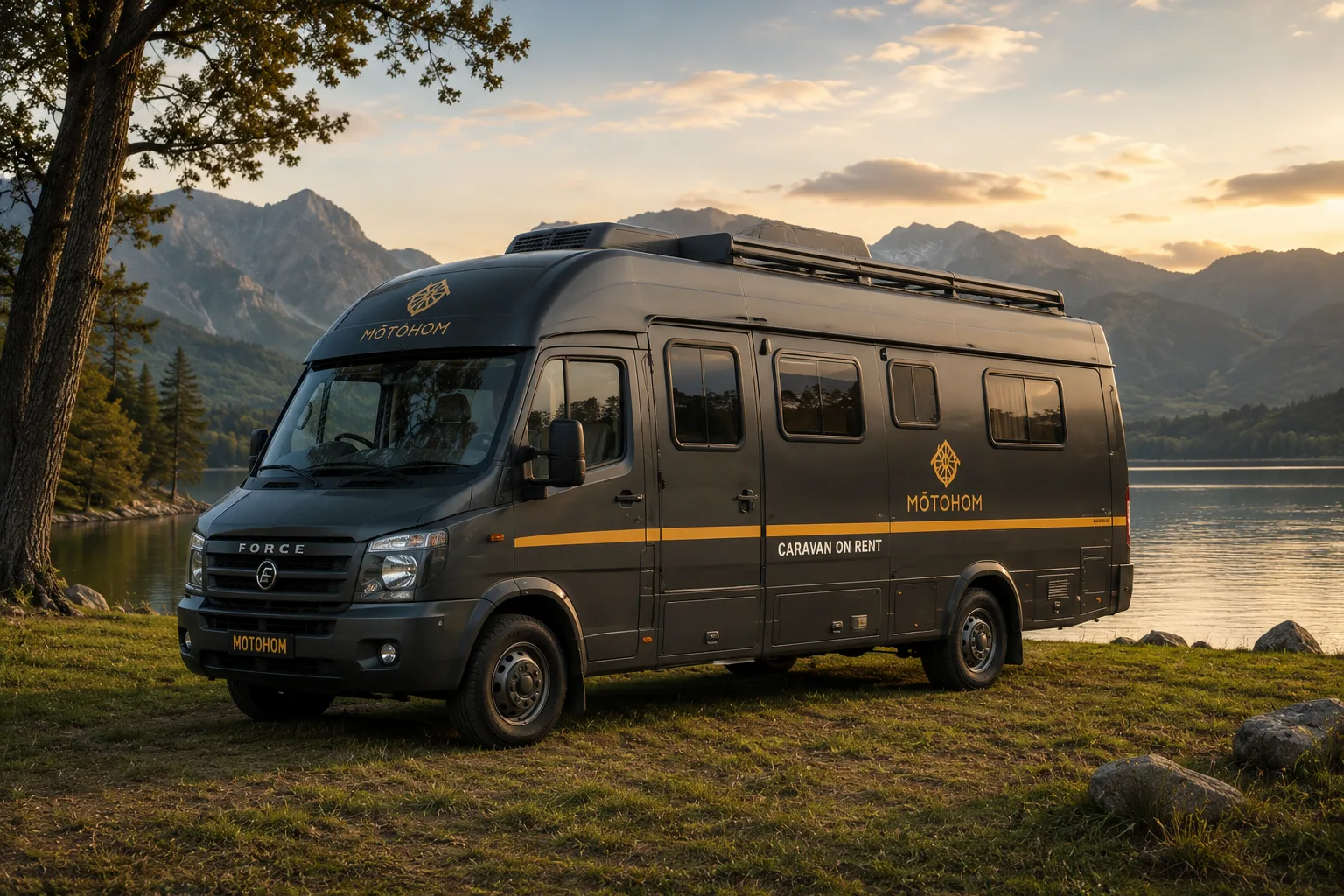
A Motohom caravan parked by a mountain lake at sunset
The Fleet

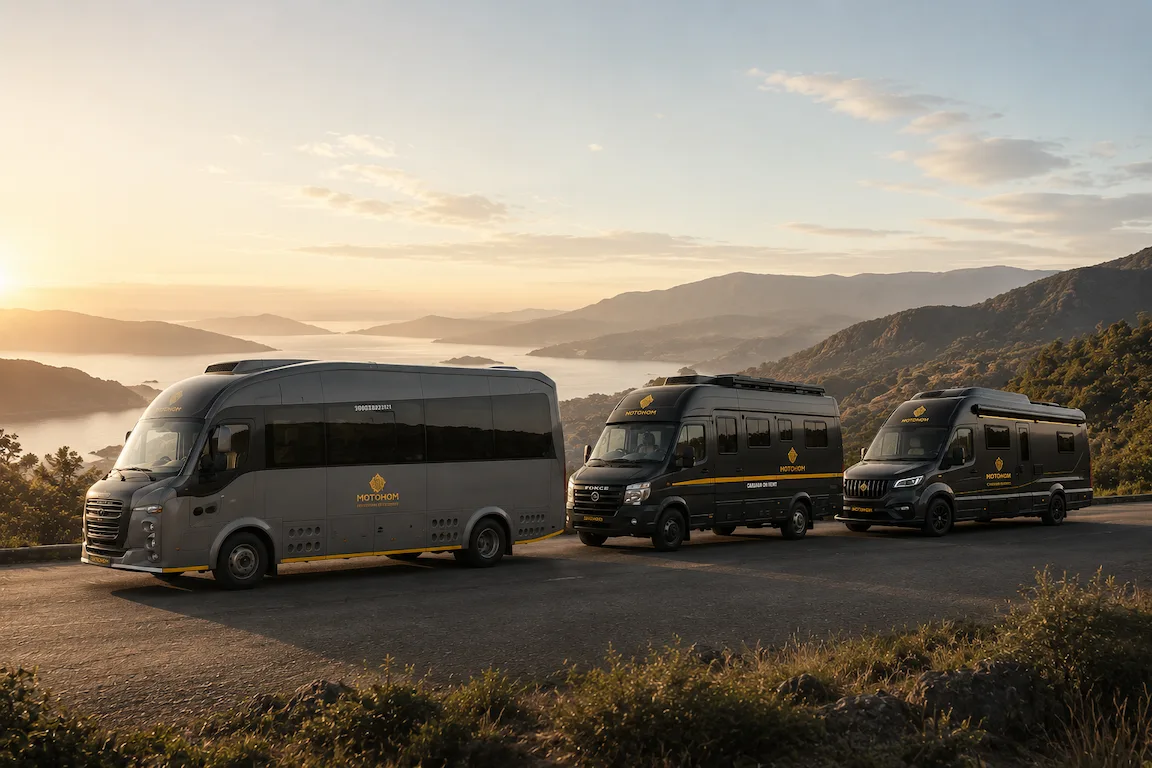
Three caravans. Three ways to travel.

Every Motohom is built in the same workshop to the same standard. What separates the three classes is how many people sleep aboard, how many can sit, and what you do inside.

At a Glance

The difference between them, in three numbers.

Two of the three carry eight. What separates them is how much body is wrapped around those eight, and where that body can go.

The Motohom T-Class

T-Class

The compact one. Eight guests, on roads the long bodies think twice about.

Guests
8
Length
6.5 m
Layout
Convertible lounge

From ₹18,000 a day · ₹70 a km

See the T-Class
The Motohom M-Class

M-Class

The spacious one. The same eight guests, with room to spread out.

Guests
8
Length
8.5 m
Layout
Master suite + bunks

From ₹25,000 a day · ₹120 a km

See the M-Class
The Motohom U-Class

U-Class

The working one. Six guests and an executive suite that moves.

Guests
6
Length
8.5 m
Layout
Executive lounge

From ₹22,000 a day · ₹100 a km

See the U-Class
8 guests · 6.5 m

T-Class

The compact one. Eight guests, on roads the long bodies think twice about.

The shortest caravan in the fleet at 6.5 metres, carrying the same eight guests as the M-Class in two metres less body. That is the whole point of it: it parks at a hill halt the longer caravans have to be routed around, and takes a narrow approach road without a conversation. The trade is space rather than headcount — the lounge does double duty, so the same room is where you eat and where you sleep.

Guests
8
Length
6.5 m
Layout
Convertible lounge

What is inside

  • KitchenFull kitchenette
  • BathroomEnsuite wet room
  • ClimateRoof AC + heater
  • PowerBattery bank + inverter
  • Connectivity4G router

Choose this if

  • The route has tight hill roads or small halts where length is the constraint.
  • You want the full eight aboard without the longest body in the fleet.
  • It is a first caravan trip and you would rather start simple.
Enquire about the T-ClassRent this class →From ₹18,000 a day or ₹70 a kilometre
8 guests · 8.5 m

M-Class

The spacious one. The same eight guests, with room to spread out.

Two metres longer than the T-Class and carrying the same eight guests, so every one of those metres goes into living rather than headcount: a master suite at one end and bunks at the other, nothing to convert at bedtime, and a full kitchen and rain shower instead of their compact versions. It is the one to take when the journey is long enough that the difference between adequate and comfortable starts to matter.

Guests
8
Length
8.5 m
Layout
Master suite + bunks

What is inside

  • KitchenFull kitchen
  • BathroomEnsuite + rain shower
  • ClimateZoned climate control
  • PowerBattery bank + inverter
  • Connectivity4G router

Choose this if

  • The journey runs a week or longer, where a fixed bedroom stops being a luxury.
  • Three generations are travelling and the sleeping arrangements have to be separate.
  • The roads are open enough that 8.5 metres costs you nothing.
Enquire about the M-ClassRent this class →From ₹25,000 a day or ₹120 a kilometre
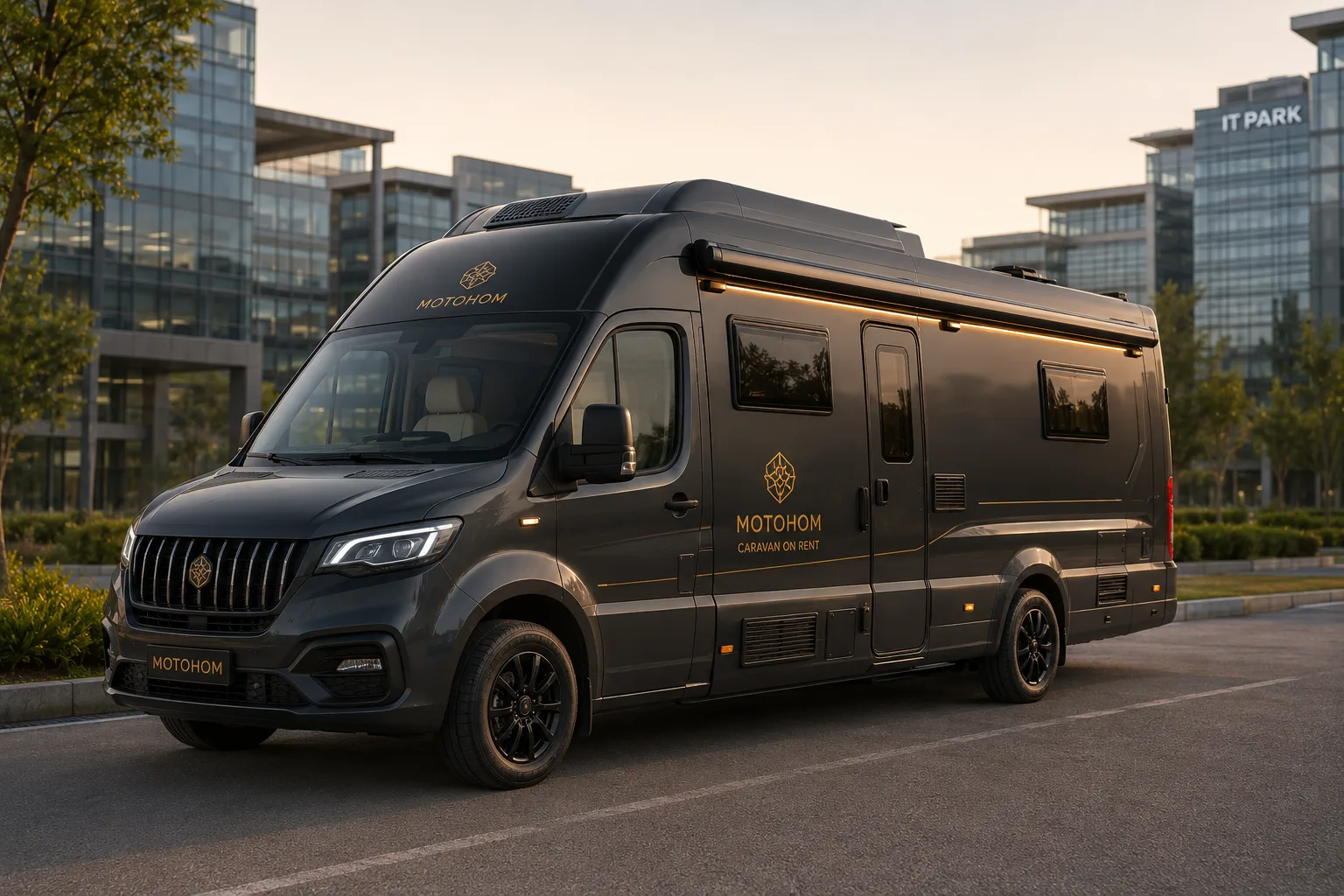
6 guests · 8.5 m

U-Class

The working one. Six guests and an executive suite that moves.

The same 8.5-metre body as the M-Class, carrying six rather than eight — the two places it gives up become the lounge, the workstations and the room to hold a conversation in. Reclining seats and a satellite link alongside 4G mean the day's work survives the stretches of road where mobile networks do not, which is the whole point of taking a meeting into the hills.

Guests
6
Length
8.5 m
Layout
Executive lounge

What is inside

  • KitchenCompact galley
  • BathroomEnsuite wet room
  • ClimateZoned climate control
  • PowerBattery bank + generator backup
  • ConnectivitySatellite + 4G

Choose this if

  • The travelling is for work as much as for the view.
  • Six travel in more room than eight would have, and the lounge is the point.
  • Connectivity has to hold where mobile coverage does not.
Enquire about the U-ClassRent this class →From ₹22,000 a day or ₹100 a kilometre
Side by Side

Every specification, compared.

Standard configurations, and the rates a journey starts from. Both are a starting point — layout, power capacity and the quote itself are set per journey.

SpecificationT-ClassM-ClassU-Class
Best suited toHill routes, short tripsLong journeys, full comfortExecutive travel and hosting
Guests886
Length6.5 m8.5 m8.5 m
LayoutConvertible loungeMaster suite + bunksExecutive lounge
KitchenFull kitchenetteFull kitchenCompact galley
BathroomEnsuite wet roomEnsuite + rain showerEnsuite wet room
ClimateRoof AC + heaterZoned climate controlZoned climate control
PowerBattery bank + inverterBattery bank + inverterBattery bank + generator backup
Connectivity4G router4G routerSatellite + 4G
Body typeRigidRigidRigid
WaterGrey + black separatedGrey + black separatedGrey + black separated
From, per day₹18,000₹25,000₹22,000
From, per kilometre₹70₹120₹100

Building rather than renting? See how a commission is specified — every row here is a starting point, not a fixed catalogue.

Still Deciding

Which class is yours?

Three situations that account for most of the journeys we run.

If this is you

Eight of you, on a route through the hills

Take theT-Class

It carries the same eight as the M-Class in 6.5 metres, which is what gets you up a switchback and into a small halt.

If this is you

Eight of you, for a week or more

Take theM-Class

The same headcount with two more metres around it — a fixed master suite, bunks, and the full kitchen a long trip needs.

If this is you

A team that needs to work, host or travel discreetly

Take theU-Class

Six guests in an 8.5-metre body, satellite connectivity, and a lounge laid out for a meeting rather than a meal.

Travelling as a larger group, or none of these quite fits? Tell the concierge — larger parties travel as a convoy of two caravans under one lead crew.

Standard on All Three

The class changes the space. Not the standard.

These are fitted to every Motohom whichever class you travel in — several of them because state caravan tourism policy requires them, the rest because a caravan without them is not one we would put a family in.

How they are built →
  • A trained driver and helper on every journey
  • Rigid body, built and serviced in our own workshop
  • Air conditioning throughout the cabin
  • Ensuite bathroom with hot water
  • Separate grey-water and black-water tanks
  • Deep-cycle battery bank, inverter and external hook-up
  • Toe-touch stabilisers and a power wheel mover for positioning
  • GPS with real-time monitoring, and driver-to-cabin intercom
Questions

Caravan, motorhome, vanity van.

Different words, largely the same vehicle. What they mean here, and what these actually do.

In India the two words are used for the same vehicle, along with 'home on wheels' and 'caravan on rent'. All of them describe what Motohom builds: a rigid-body vehicle you live in rather than merely travel in, with berths, a galley and an ensuite bathroom. The only distinction worth making is a practical one — ours are chauffeured, so a trained driver and helper travel with every journey.

Yes. The U-Class is the closest thing in the fleet to a production vanity van: eight seated, an executive lounge, satellite connectivity alongside 4G, and an ensuite. Units book them as mobile green rooms, styling suites and hair-and-makeup that follow the shoot to location, with our crew driving and positioning the vehicle. Film and production hire is arranged through the corporate desk.

A luxury bus or tempo traveller is seating for the journey — it moves a group efficiently and everyone gets out at a hotel. A caravan is built to be lived in: six to eight guests with beds, a full galley, a bathroom, climate control and power sized to run overnight off-grid. It carries fewer people and replaces the hotel rather than driving you to one.

No — every Motohom journey is chauffeured. A trained driver and a helper travel with the caravan, and both are briefed on your itinerary before you board. An 8.5-metre rigid body on a hill road is a specialist drive, and the crew also handle positioning, stabilising, hook-ups and the halts.

Journeys run pan-India, from Ladakh to Kerala, with permits and inter-state clearances handled by us. The genuine constraint is halts rather than roads: caravan parks are required to keep five metres between vehicles and a registered agri-tourism centre may host only a few caravans, so stops are confirmed in advance. Length matters on tight hill approaches, which is where the 6.5-metre T-Class earns its place.

Eight guests is the most a single caravan takes — the T-Class and the M-Class both do, in different lengths of body. Larger parties travel as a convoy of two or more caravans under one lead crew and a single coordinator.

Yes. The three classes are standard configurations, not a fixed catalogue: sleeping arrangements, galley layout, bathroom, power capacity and finishes are all specified per commission, and the build happens in our own workshop, which is also where it is serviced afterwards.
Crafted for Life on the Road

Every detail. Obsessively considered.

01

Luxury that feels like home

Hand-finished joinery, full-grain leather and materials chosen to soften rather than crack over a decade of road use.

02

Engineered for real living

Storage, circulation and sightlines resolved before styling — a cabin four people can move around each other in.

03

Built for anywhere

Suspension, clearance and thermal insulation specified against Indian highways, hill passes and unsurfaced approaches.

04

Smart systems, seamless control

Deep-cycle storage, inverter capacity and climate control sized to the cabin's real draw, not a spec-sheet maximum.
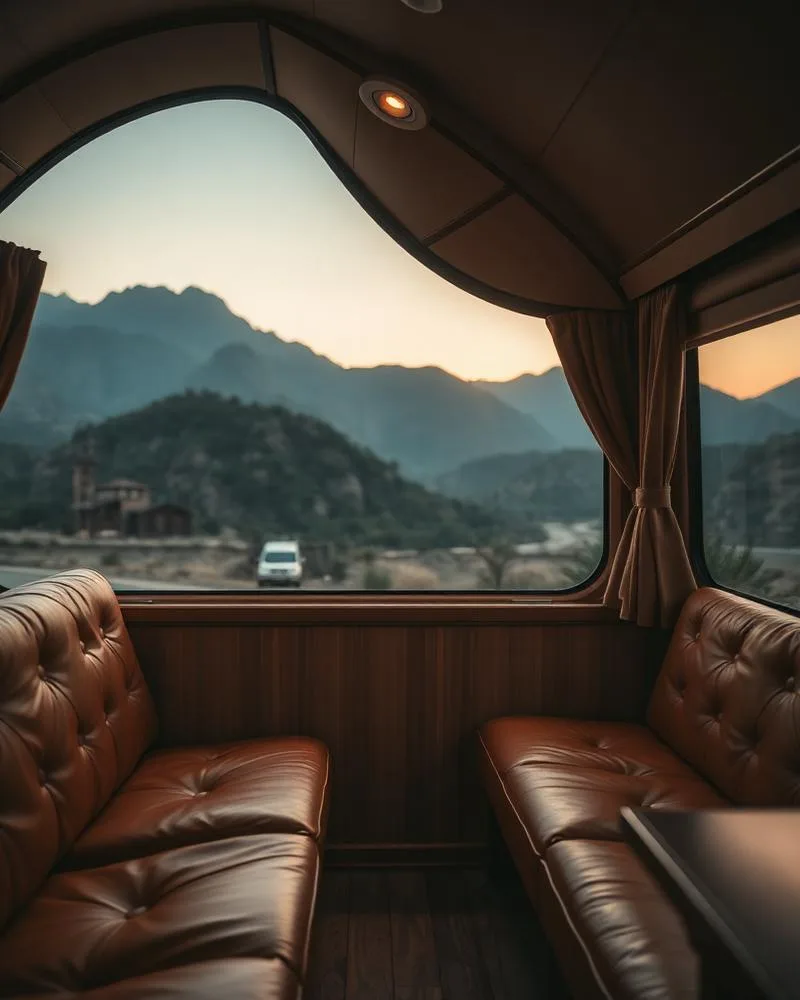
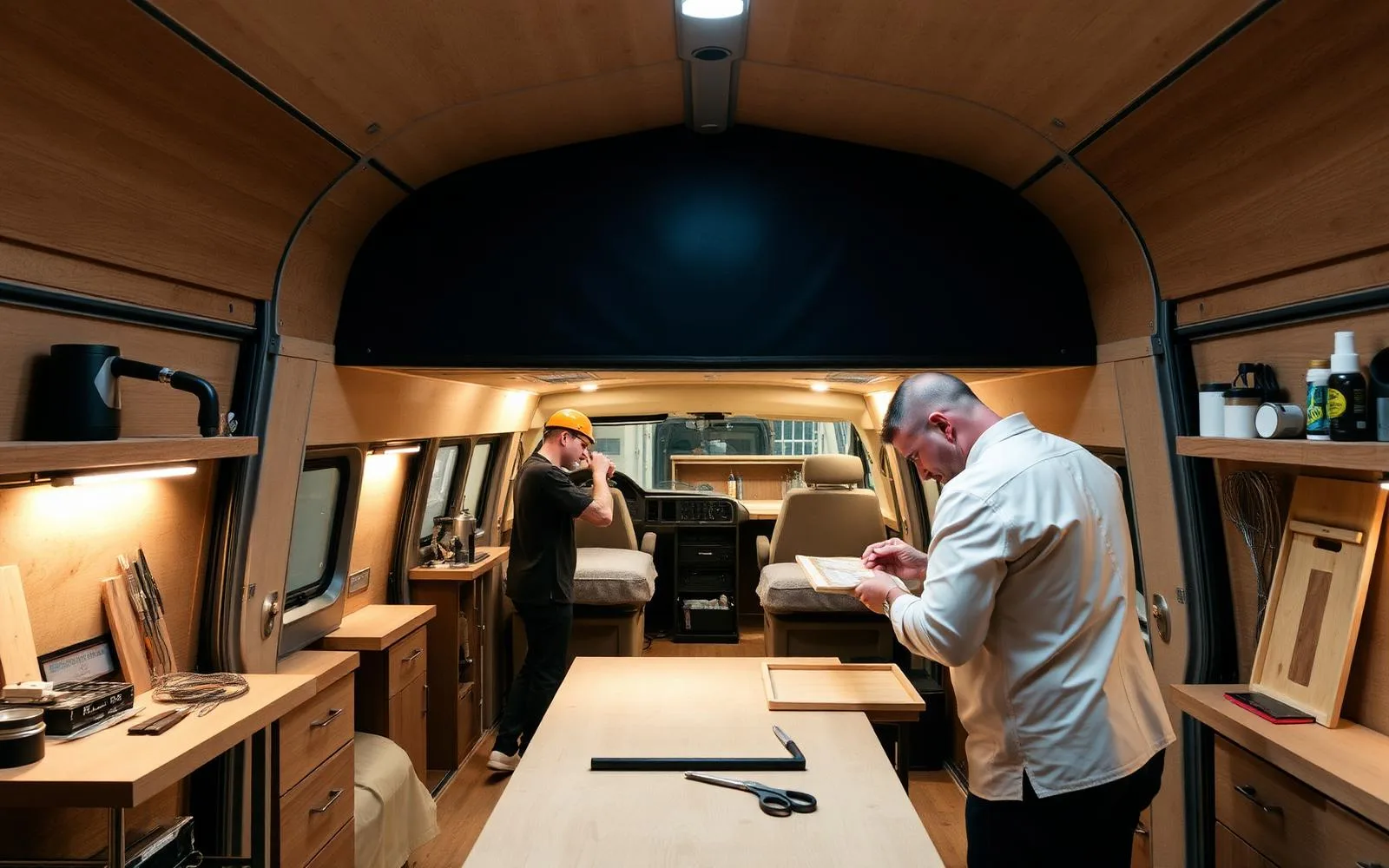
Luxury that feels like home
Built Around You

Your Motohom. Your way.

The three classes are where a commission starts, not where it ends. Choose your layout, finishes, materials and features, and we build the caravan around them.

Layouts
Finishes
Materials
Kitchen
Bathroom
Technology
Power & Electrics
Entertainment